
We are living in a time when almost every territorial project is presented alongside concepts such as artificial intelligence, digital twins or advanced analytics. The message is appealing: prediction, automation, intelligent decision-making.
But there is a less visible and far more decisive reality:
these systems only work properly when data is well structured.
AI applied to territorial management does not just require large volumes of information. It requires data that is coherent, comparable and maintainable over time. This is where standards come into play.
INSPIRE is not a “modern” technology, nor does it aim to be one. It is a framework that defines how geospatial data is described, shared and understood across organizations. Precisely for this reason, it becomes essential when the goal is to go beyond isolated, one-off projects.
Without a common framework:
- AI models learn from inconsistent data,
- digital twins become local representations that are difficult to scale,
- each new use case requires integrations and adaptations to be rebuilt from scratch.
With INSPIRE:
- data maintains a shared semantics,
- analyses are reproducible,
- solutions can grow and connect with other systems.
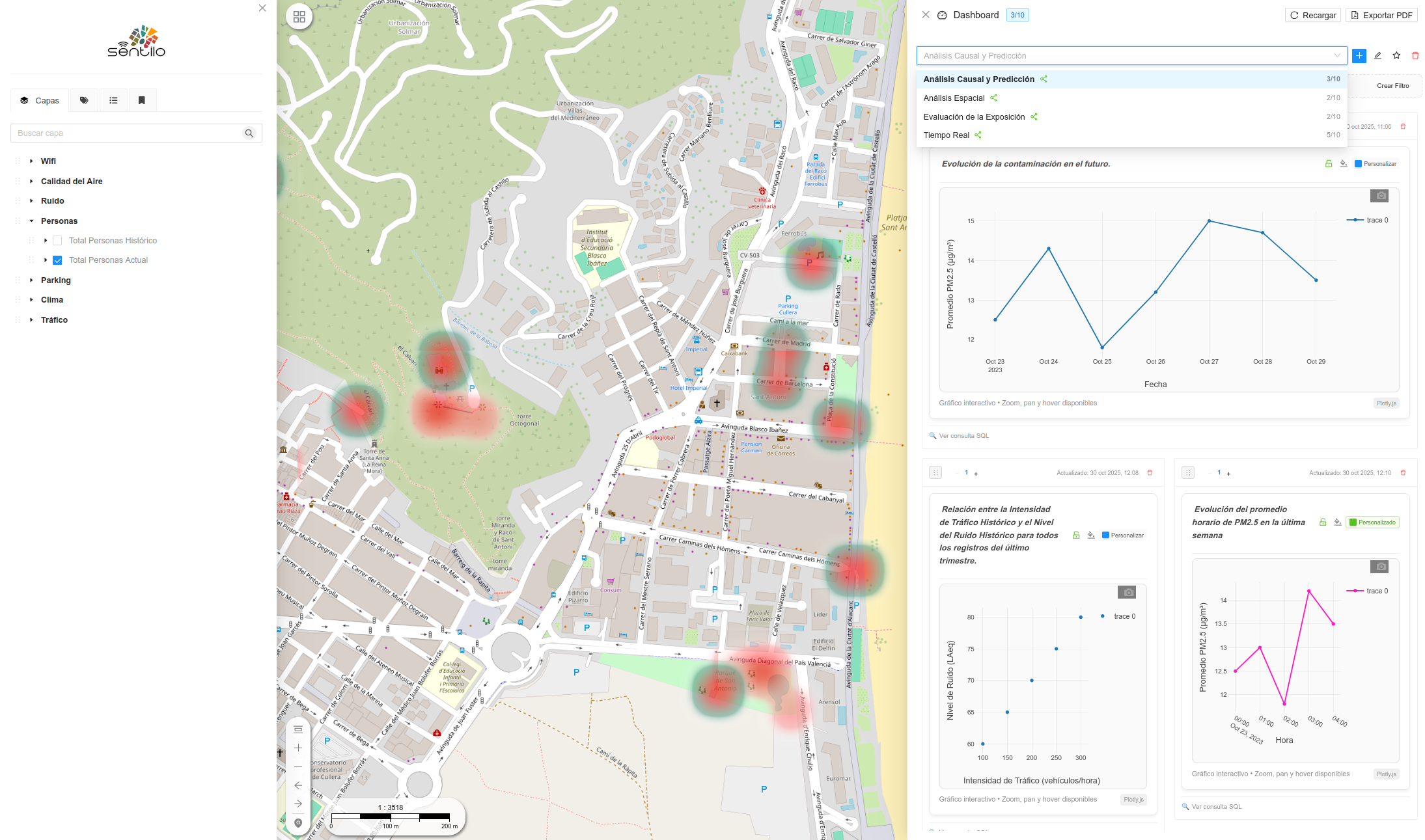
In our case, this foundation has enabled us to integrate artificial intelligence capabilities directly into SDI platforms, to the point of interacting with gvSIG Online using natural language, generating dynamic dashboards, or launching advanced analyses without breaking the coherence of the system.
The more advanced the solutions we want to build on top of the territory, the more we depend on standards that are rarely mentioned.
In upcoming posts, we will go into more detail on how these AI capabilities are being practically integrated into gvSIG Online and how we are applying them across a wide range of projects.


 Alvaro
 Amparo Cisneros
 adelrey
 Alegria
 asoredesocial2006
 Augusta
 christinesig
 cordin
 csanper
 danielvicb
 dispiste
 edmarmoretti
 elenasanchez232
 eliazerk
 fjsolis
 Gabi
Gabi ggowtham
 Giuliano Ramat
 Valenty
 Georg Sedlmeir
 hydrologiclady
 jgalans
 Joaquin del Cerro
 Juan Lucas Domínguez Rubio
 jolicar
 josebadia
 Jorge Piera Llodrá
 Jordi Torres
 Chevi
Chevi learozz
 leoruizb
 Alonso Morilla
 Lluís Marqués
 martapacoret
 Óscar Martínez
 mateoboudon
 mateocb16000
 Mario
Mario Mario Chaveli
 mjlobato76
 Manuel
 mmontesinos
 moovida
 Nacho Varela
 nbrodin
 André
André piotrpachol
 psanxiao
 Sergio Acosta y Lara
 Spatioblog
 Sergio Acosta y Lara
 uliwerz
 Victor Acevedo
 Viqui
Viqui volaya


